

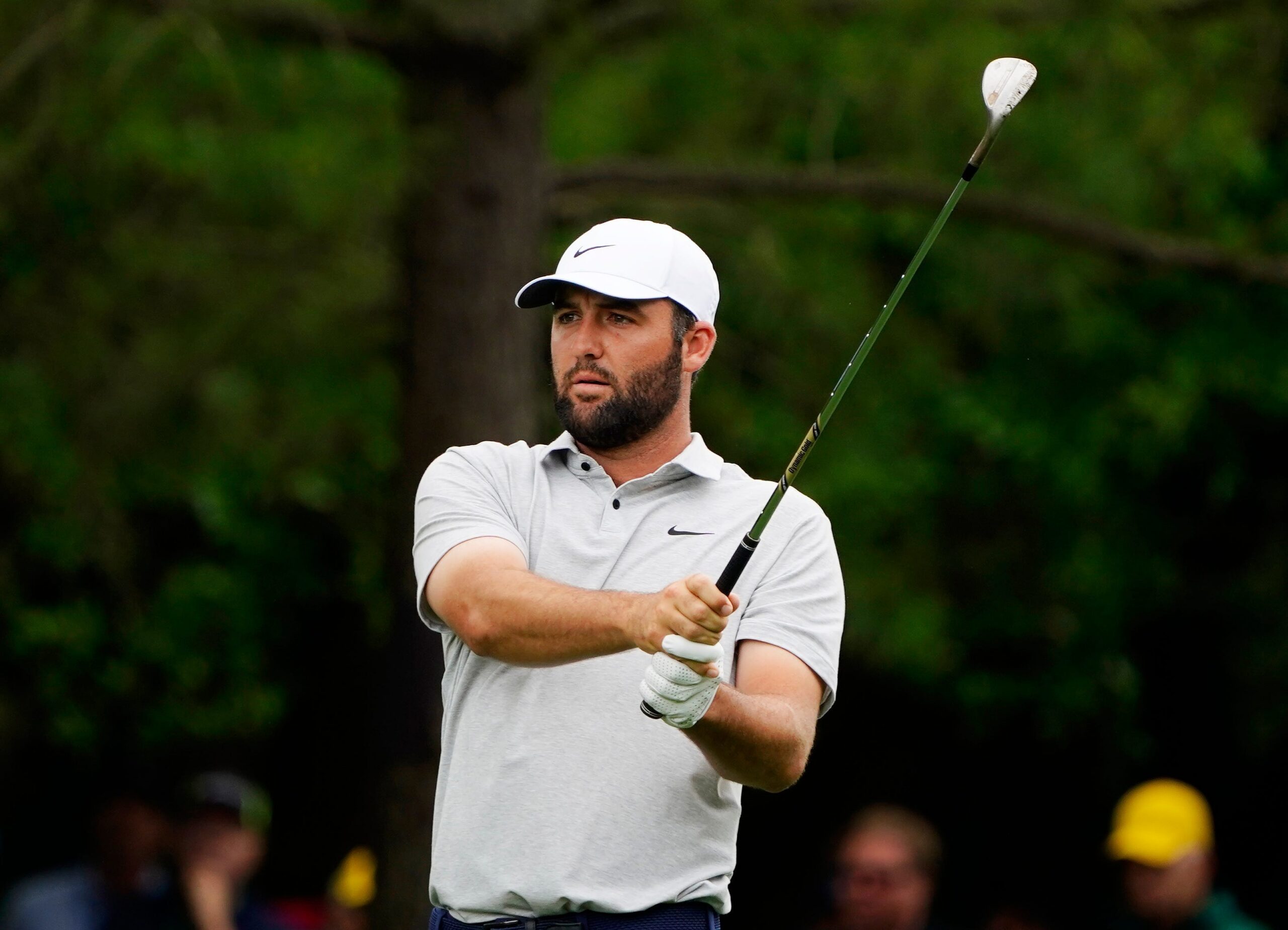
Scottie Scheffler walked off the course at Doral after a 71 that left him seven shots behind Cam Young, and the timing of the question that followed did him no favors. Instead of focusing on his round, he was asked to weigh in on one of golf’s most loaded topics: whether LIV Golf players should be allowed back on the PGA Tour. His response was brief, edged with fatigue more than anger. “I just got off the golf course. I don’t know what you want from me,” he said, brushing it off with a laugh that didn’t quite hide the irritation.
A Familiar Pattern in Press Conferences

It wasn’t an isolated moment. Earlier in the season at Augusta, after firing a 65 to climb into contention, Scheffler was asked what score was available to him. He dismissed it as a “horrible question,” again laughing, again signaling a growing impatience with media exchanges that drift into the abstract or the political. These moments are small on their own, but together they form a pattern in which Scheffler seems increasingly unwilling to entertain questions he views as unnecessary or poorly timed.
A Divided Reaction From Golf Fans
This latest exchange landed differently because of the context. The LIV-PGA divide has dominated headlines, and with Rory McIlroy absent from Doral, attention naturally shifted to Scheffler as the top-ranked player in the field. Others, including Jordan Spieth and Cameron Young, offered measured responses when asked the same question. Scheffler chose not to engage at all.
The reaction split quickly. Some fans saw a player who had just finished a frustrating round being pulled into a debate he doesn’t control. They viewed the question as misplaced, better directed at executives than players. Others focused on the contrast, noting that every other player asked managed to give some form of answer, however brief.
The Weight of Being Number One
What makes the moment linger is the gap between expectation and response. Scheffler doesn’t need to deliver sweeping opinions or take sides publicly. But as the world number one, even a restrained answer carries weight. Cameron Young managed that balance with a simple acknowledgment that certain decisions sit above players’ pay grades. It was enough to address the question without taking ownership of the controversy.
Scheffler’s choice to sidestep it entirely keeps the focus on his reaction rather than the issue itself. Coming off a round that left him chasing the leaderboard, it’s understandable that his priorities were elsewhere. Still, when the same scenario repeats, sharp play followed by sharp dismissals, the pattern becomes part of his public image, whether he intends it or not.