

Scottie Scheffler didn’t leave Augusta National empty-handed, but he did leave with a lingering sense that something, somewhere, slipped just out of reach. One stroke separated him from Rory McIlroy, who secured a second straight green jacket in a tightly contested Masters that turned heavily on timing, conditions, and a single round Scheffler couldn’t quite recover from.
A Narrow Margin Built Over Four Days
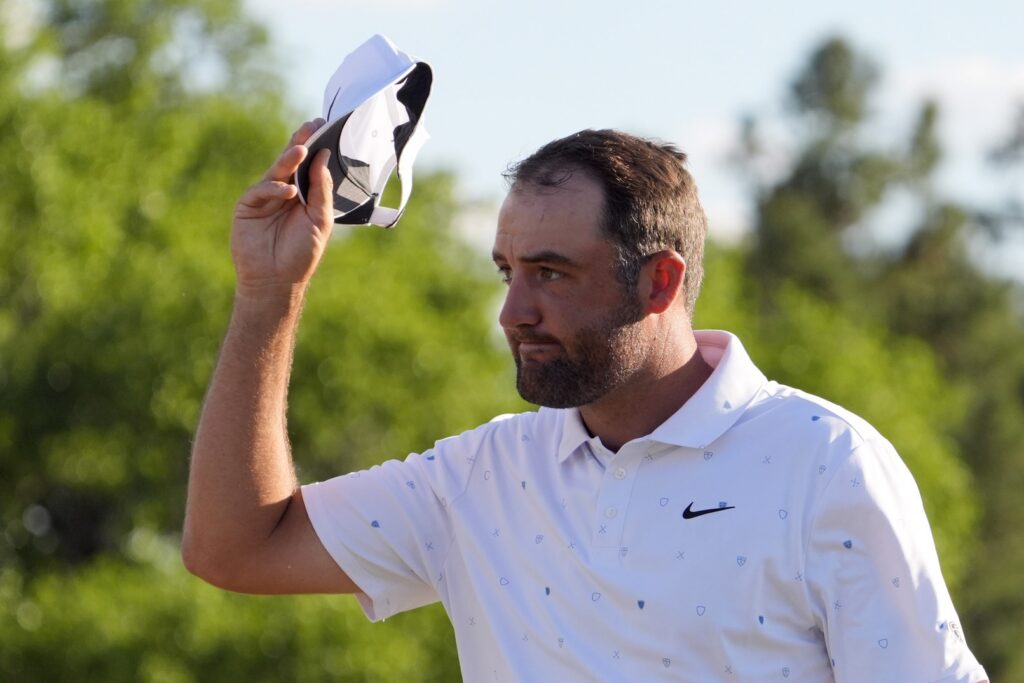
By Sunday evening, Scheffler had done almost everything required to win. He surged back into contention after starting the weekend well off the pace, erasing what had been a daunting gap and applying late pressure with a composed, aggressive finish. Over four rounds, he piled up 12 birdies and two eagles, numbers that typically anchor a winning performance at Augusta. But five bogeys, and more specifically, when they occurred, told the real story.
Friday Conditions Shifted the Masters
Scheffler pointed directly to Friday as the turning point. His second round, a 74 marked by four bogeys, stood in stark contrast to what unfolded later that same day. Early tee times, including Scheffler’s, faced a course that hadn’t yet softened. By the afternoon, conditions had shifted. Greens became more receptive, and scoring followed. Rory McIlroy and others capitalized, stacking birdies in a window Scheffler never truly got to experience.
He didn’t frame it as an excuse. Instead, it came across as a matter-of-fact assessment of variables outside any player’s control. Augusta National, like any outdoor venue, changes hour by hour. Wind, moisture, and temperature quietly redraw the boundaries of what’s possible. Scheffler acknowledged that reality, but he also made clear that the contrast between Thursday’s firmness and Friday’s late softness was noticeable enough to matter.
A Comeback That Fell One Shot Short
Thursday afternoon had already tested the field, with gusty winds limiting scoring opportunities. Scheffler navigated that stretch respectably, but when Friday presented a different version of the course, he wasn’t able to adjust quickly enough to take advantage. By the time the leaderboard began to shift, he was already chasing.
What followed over the weekend was a reminder of why Scheffler remains one of the most consistent players in the game. He closed the gap methodically, round by round, turning a distant deficit into a near tie. The final margin, just one stroke, only sharpened the focus on that Friday round.
In the end, the difference wasn’t a collapse or a missed putt on 18. It was a narrow window of opportunity that opened for some and not for others, and a single round where the course and the timing didn’t quite align with Scheffler’s run.

