

Greg Norman is no longer steering LIV Golf, but he’s still watching closely, and what he sees ahead looks uncertain, dependent, and unfinished.
Funding Questions Now Define LIV Golf’s Next Chapter
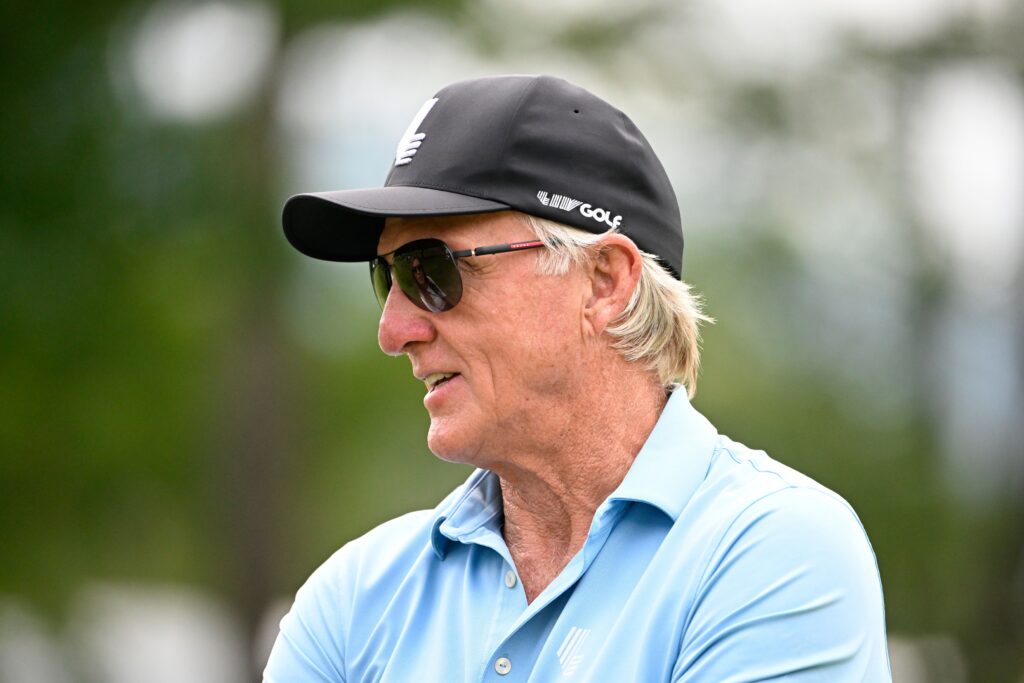
In a candid sit-down with Dan Rapaport, the former LIV chief made it clear that the league’s next phase hinges almost entirely on his successor, Scott O’Neil. The challenge is straightforward in theory and daunting in practice: find money, and find it fast. With reports suggesting Saudi Arabia’s Public Investment Fund could step back after the 2026 season, LIV’s financial safety net may not be as secure as it once appeared. Norman didn’t soften that reality. He pointed directly at O’Neil’s responsibility to take LIV on the road, pitch its value, and convince outside investors that the model can stand on its own.
That shift from sovereign-backed disruptor to self-sustaining sports business marks a critical turning point. O’Neil himself hinted at the pressure during a recent appearance, acknowledging that while funding is locked in for now, the long-term plan requires aggressive deal-making. The fact that one of his more candid remarks was later scrubbed from social media only added to the sense that LIV’s future is still being negotiated in real time.
Player Freedom Remains a Core Selling Point
Norman, for his part, remains proud of what he built. He points to player freedom as a defining achievement, highlighting cases like Brooks Koepka’s ability to move between tours as evidence of a system that didn’t previously exist in professional golf. That philosophy extends to current uncertainties, including Bryson DeChambeau’s looming contract situation. Norman isn’t involved anymore, but he’s paying attention, particularly to how LIV handles expiring deals and the balance between star power and financial discipline.
The contract landscape could become one of LIV’s biggest stress tests. Retaining top names without the same level of guaranteed backing would force different decisions, both from players weighing their options and from executives trying to manage costs.
A Missed Partnership and a Changing Tone
Perhaps the most revealing part of Norman’s reflection is what he says he originally wanted LIV to be. Not a rival league locked in conflict with the PGA Tour, but a partner. He describes repeated, unanswered attempts to open dialogue with commissioner Jay Monahan and outlines a vision that now feels almost counterfactual: LIV events integrated into weaker PGA Tour stops, injecting prize money, star players, and economic impact into struggling markets. Four U.S.-based events, the rest global, all operating in cooperation rather than competition.
That vision never materialized. Instead, LIV and the PGA Tour spent years in a bitter standoff that reshaped the sport’s structure and relationships.
Now that leadership is changing on both sides, Norman sees a different tone emerging. He openly praises new PGA Tour CEO Brian Rolapp, pointing to a more modern outlook, one that values player visibility and fan engagement in ways LIV tried to prioritize from the start. DeChambeau’s rise as a social media force stands as a concrete example in his mind, a case of what happens when players are given more control over their personal brands.
Norman’s role going forward is observational, not operational. He’s designing courses, stepping away from the day-to-day, but keeping a close eye on how the experiment he helped launch either stabilizes or struggles to find its footing without the financial muscle that defined its early years.

