

The moment you knife one out of a bunker, you usually feel it before you even see it. That sharp, clipped strike has a different sound, a different vibration, and more often than not, it leaves behind evidence. When you pick up the golf ball and spot a scuff, the question becomes less about what happened and more about what to do next.
What a Golf Ball Scuff Actually Changes
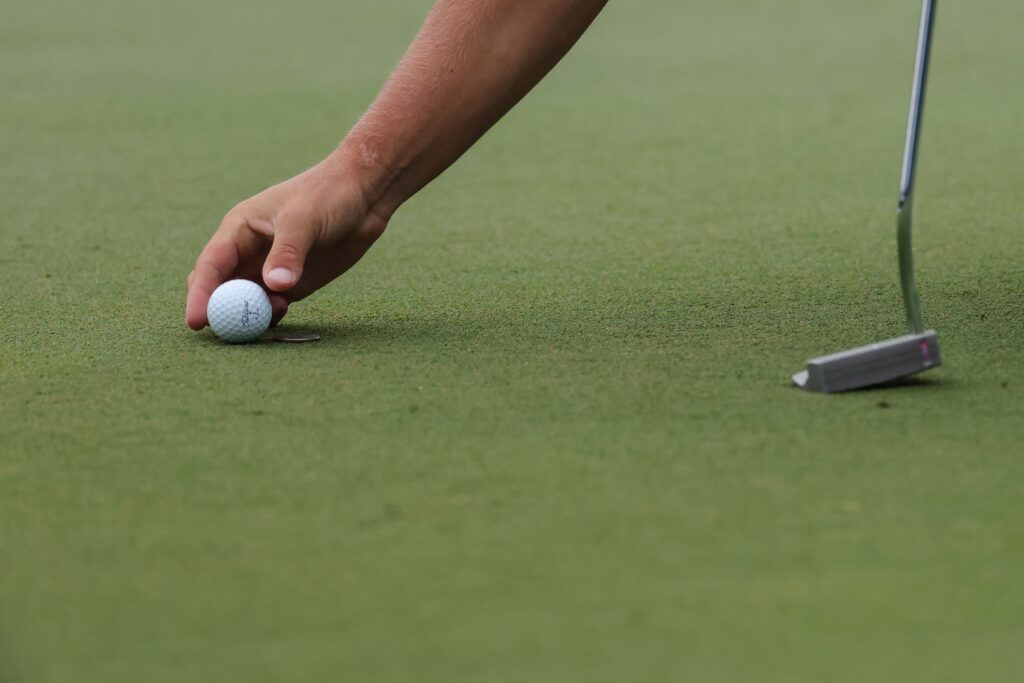
A noticeable scuff is not just cosmetic damage. It’s a structural change to the surface of the ball, and that surface plays a direct role in how the ball behaves in flight. Modern golf balls are engineered with precision; every dimple and curve contributes to predictable launch, spin, and stability. Once that outer layer is compromised, even slightly, you introduce variables that weren’t there before.
The key issue is consistency. A clean ball gives you a reliable response. A scuffed one does not. That doesn’t mean every damaged ball will immediately veer off target, but it does mean you’ve introduced uncertainty into a game that already has enough of it. You might hit what feels like a perfect shot, only to watch it drift subtly offline or come up short with less spin than expected.
Where the Line Really Is
There is, however, a practical threshold. Minor paint blemishes or faint scratches are usually harmless. They don’t penetrate the cover meaningfully, and performance remains largely intact. But once the damage becomes visible at a glance, something you can feel with your finger or clearly see from a few feet away, you’re entering territory where performance degradation is real.
A useful guideline is size. If the mark is as large as a dime or larger, or if it includes any raised edges, cuts, or missing material, the ball has effectively lost its reliability. At that point, keeping it in play becomes a gamble rather than a calculated decision.
The Confidence Factor
There’s also the mental side. Golf is as much about confidence as mechanics. If you’re standing over a shot wondering whether the ball will react properly, that doubt can creep into your swing. Even if the physical impact is small, the psychological effect can be enough to justify switching.
In the end, it comes down to trust. If the ball looks compromised and you’re questioning it, it’s already done enough damage. Swap it out, remove the variable, and move forward with something you don’t have to second-guess with your next swing.