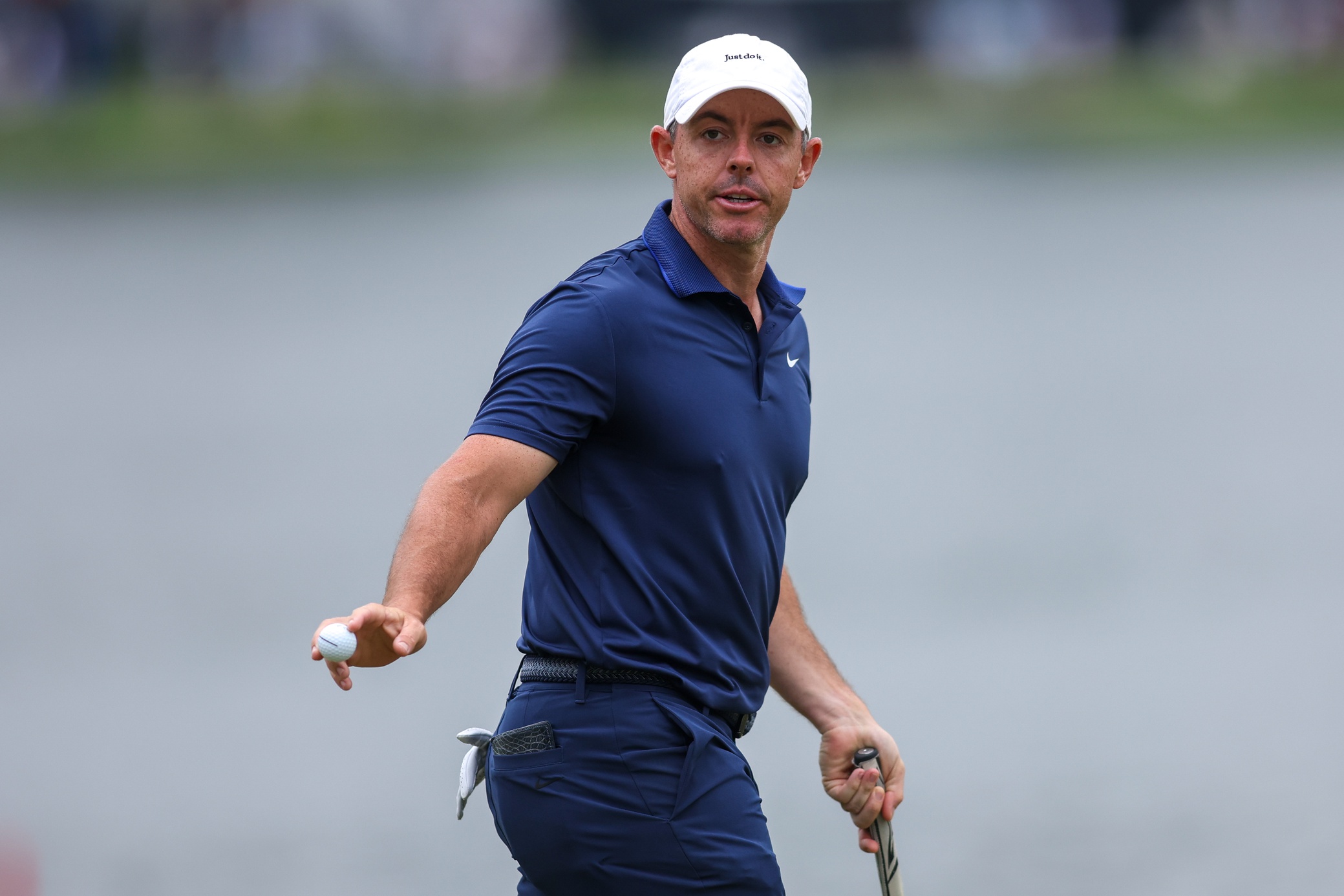
As Rory McIlroy begins the 16th season of his PGA TOUR career, the setting could not be more fitting. Pebble Beach. Ocean winds. A title defense. And, perhaps most tellingly, the return of his “trusty irons.”
The 2026 AT&T Pebble Beach Pro-Am marks not just another tournament start, but a symbolic reset. After briefly experimenting with TaylorMade P7CB cavity-back irons during three early-season starts on the DP World Tour, McIlroy has officially put the test to rest. His RORS PROTO muscle-back blades are back in the bag.
“That experiment’s over,” he said Tuesday, standing against the crisp California coastline.
A Search for Forgiveness at the Highest Level
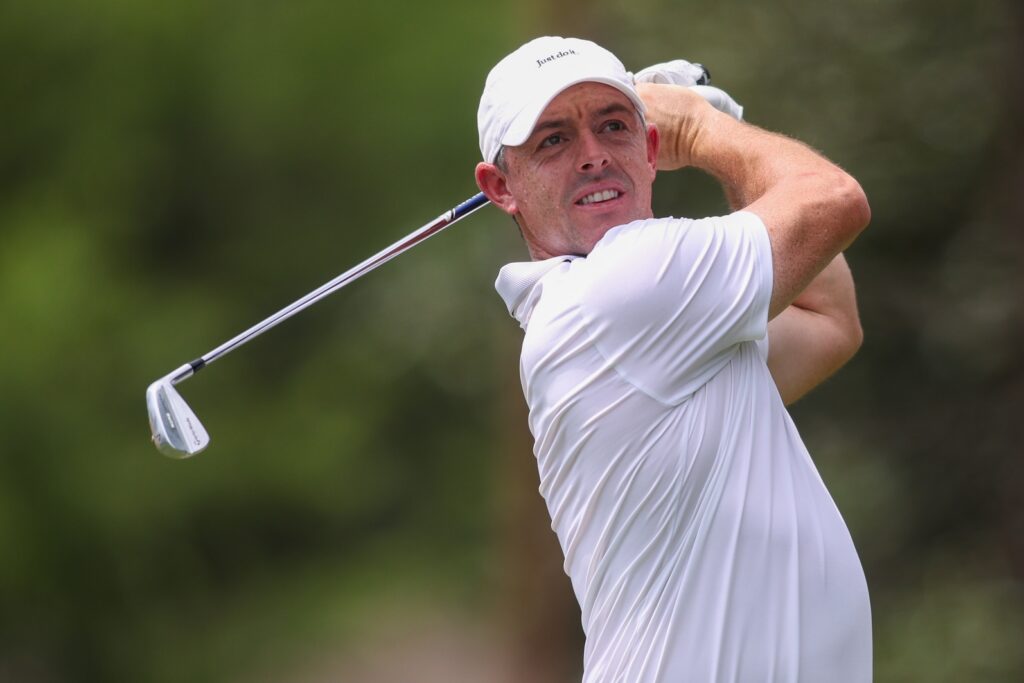
For a player of McIlroy’s caliber, the world’s second-ranked golfer and fresh off a historic Masters victory that completed his career Grand Slam, equipment changes are never casual. They are calculated. Precise. And often revealing.
The motivation behind the switch was straightforward: forgiveness. Even elite ball-strikers search for marginal gains, and cavity-back irons are engineered to offer precisely that. On slight mishits, they preserve distance and stability. McIlroy had acknowledged that with his bladed 5-iron, a strike just off-center could cost him 10 to 15 yards. With the cavity backs, that dispersion shrank to roughly 5 to 7 yards. The numbers were more consistent. The margins are tighter.
In three DP World Tour starts using the cavity backs, McIlroy posted finishes of T14, T3, and T33, respectable results by most standards. On paper, the experiment appeared viable. But championship golf is rarely played on paper.
When Feel Overrides Data
What ultimately unsettled Rory McIlroy was not performance in theory, but sensation in execution. He identified a subtle right bias in the cavity-back design. Shots he felt should launch on a neutral line began drifting — not dramatically, but persistently enough to demand attention.
“I’d make swings that I feel like I’d make with my blades that would be a very neutral ball flight,” he explained, “and then with the cavity backs they would just start to tail off to the right.”
For years, McIlroy has relied on a slightly held-off position through impact with his blades. That movement is embedded in muscle memory, refined under the pressure of major championships. The cavity backs encouraged a fuller release, a mechanical adjustment that, while manageable in practice, felt foreign during competition.
“Once you get on the course with a card in your hand,” he noted, “it just was a different feel, especially under pressure or in the heat of competition.”
In elite golf, familiarity is not comfort; it is control. And control, especially at Pebble Beach, is non-negotiable.
Tradition Thrives at Pebble Beach
McIlroy’s return to blades also reinforces a broader trend. Despite the surge of technology promising forgiveness and stability, traditional muscle-back irons remain prevalent among winners. According to SMSonTOUR.com, 10 of the 13 champions across the PGA TOUR and DP World Tour this season have used blades to secure victory.
Pebble Beach, with its compact greens and demanding coastal winds, rewards precision more than protection. It is a venue where conviction matters as much as contact.
For McIlroy, the decision is not about rejecting innovation. It is about alignment, between instinct and equipment, between preparation and pressure. His career has been defined by bold evolution, culminating last season in a long-awaited Masters triumph and the completion of the career Grand Slam. Yet even at this stage, refinement continues.
As he defends his title on one of golf’s grandest stages, Rory McIlroy does so with irons that demand precision but offer certainty in return. In a game increasingly driven by technological advantage, his choice sends a subtle message.