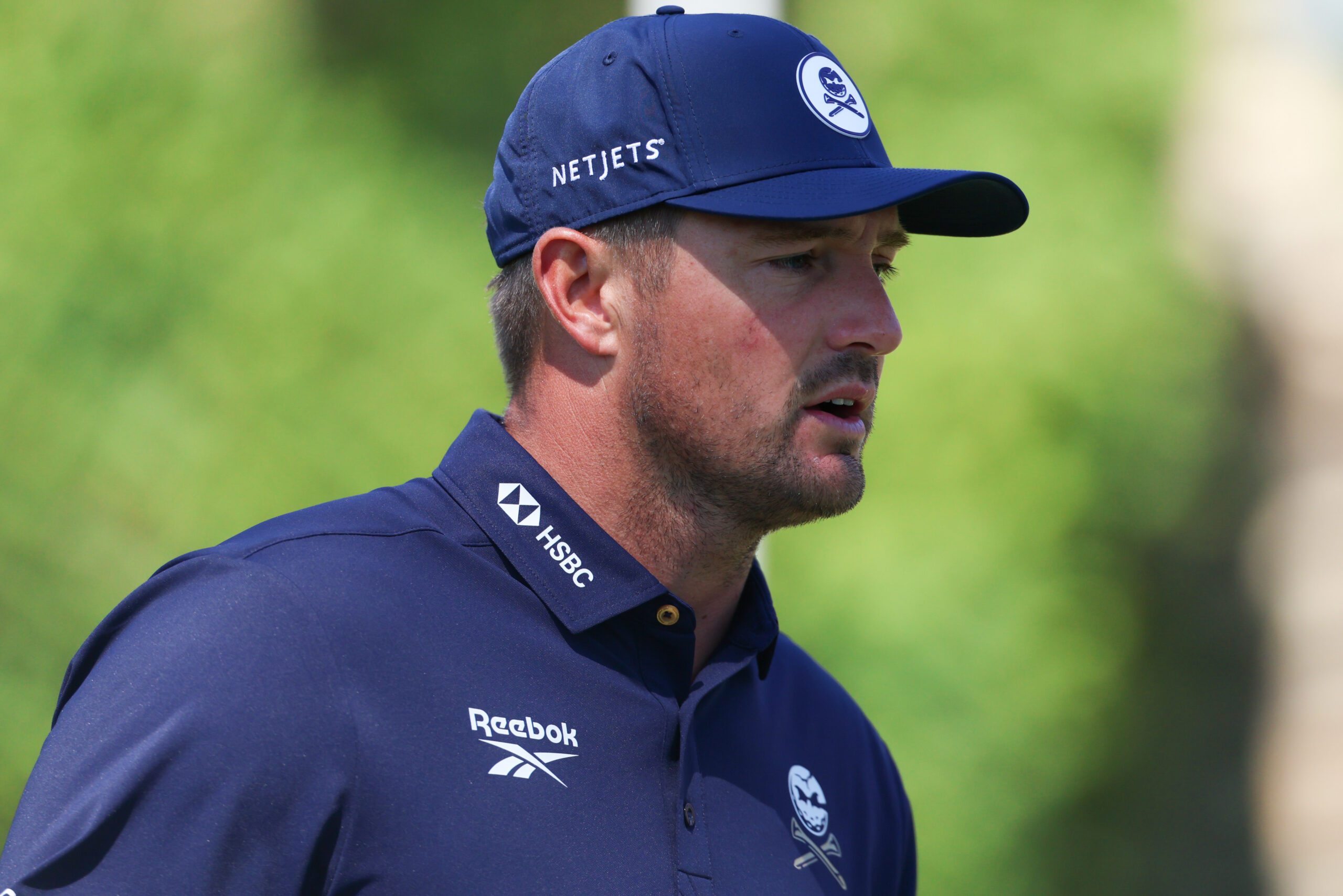
LIV Golf’s future is hanging by a thread, and that uncertainty is creating serious questions about the league’s biggest names. Bryson DeChambeau and Jon Rahm were among the most high-profile stars to leave the PGA Tour for LIV, accepting massive contracts backed by Saudi Arabia’s Public Investment Fund. Now, with reports suggesting the financial support that fueled LIV’s rise could soon be coming to an end, both players may find themselves facing difficult decisions.
When DeChambeau joined LIV in 2022, the move came with a reported $125 million contract. Rahm followed in late 2023 on a deal reportedly worth $300 million. At the time, LIV was aggressively recruiting talent and promoting its vision of team-based golf while offering prize funds that dwarfed those of most traditional tournaments. The combination proved difficult for many players to ignore.
LIV Faces Growing Financial Pressure

The landscape now appears very different. Reports indicate that the Public Investment Fund has already invested billions into LIV Golf and may be prepared to stop funding the operation by the end of the 2026 season, if not earlier. That possibility has forced LIV executives to seek outside capital, reportedly raising hundreds of millions of dollars from private equity firms, wealthy investors, and family offices to keep the league operating.
For DeChambeau, the timing is significant. His current contract is scheduled to expire at the end of 2026. Earlier this year, reports suggested he was discussing an extension and seeking a deal worth as much as $500 million. At the time, DeChambeau publicly expressed confidence in LIV’s future, saying he believed a path forward could be found as long as the league remained in operation.
Just a few months later, that future appears far less certain. DeChambeau has become one of LIV’s most recognizable personalities, combining success on the course with a substantial online following that has helped broaden his appeal beyond traditional golf audiences. That profile makes him one of the league’s most valuable assets, but it also leaves questions about where he fits if LIV undergoes major restructuring.
Rahm’s Long-Term Commitment Creates Questions
Rahm’s situation may be even more complicated. His contract reportedly runs through 2029, tying him to LIV for several more years. Unlike some players who have reportedly become involved in discussions surrounding LIV’s financial future, Rahm has largely stayed on the sidelines. When asked about efforts to secure additional investment, he offered a simple response: his job is to play golf.
Behind the scenes, LIV is reportedly evaluating significant changes. Potential options include reducing the schedule from 14 events to 10, offering players equity stakes in team franchises, and even exploring Chapter 11 bankruptcy protection to reorganize operations.
Those possible changes could have major contractual implications. According to an anonymous agent, some player agreements specifically guarantee a 14-event schedule with purses of at least $25 million. If LIV reduces either requirement, the agent suggested that players could argue their contracts have been breached.
“The contract we signed calls for 14 tournaments with purses of at least $25 million,” the agent said. “If they put together a smaller schedule for less money, which is obviously the only path forward, the contract we signed is voided. At least, that’s how we see it. If they disagree, the lawyers are going to have to sort it out.”
Potential Escape Routes Emerge
Whether that interpretation would ultimately hold up remains uncertain, but it provides a potential avenue for players seeking an exit should LIV dramatically alter its business model.
For now, LIV still has options. New investment could arrive. Bankruptcy protection could buy additional time. The league could successfully restructure and continue beyond 2026. Yet every scenario depends on securing financial stability after years of operating under the backing of Saudi Arabia’s sovereign wealth fund.
DeChambeau may have a relatively straightforward path if his contract simply expires as scheduled. Rahm, however, remains tied to a long-term agreement, making his future more dependent on whatever happens to LIV itself. That may help explain reports suggesting he would welcome circumstances that could legally void his contract before its scheduled conclusion.
As LIV’s financial clock continues ticking, the uncertainty surrounding its future is no longer limited to executives and investors. It now extends directly to the stars who helped define the league’s most ambitious era.