
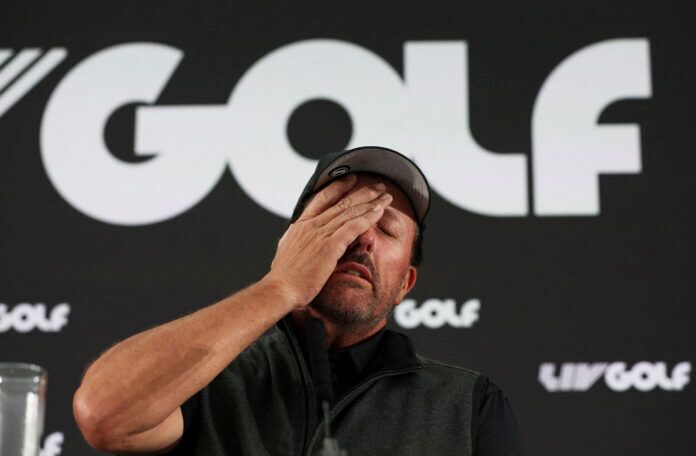
The dream of a new global golf league died on Thursday. LIV Golf confirmed it will wind down its business after investors pulled the plug on a final rescue attempt. The league had hoped to restructure as “LIV 2.0” with fresh capital, but that path collapsed. Key players refused to return, and the money needed to keep the lights on vanished. This marks the end of the Saudi-backed project that started in 2022.
On Thursday, Attorney Matthew Williams informed the New Jersey bankruptcy court that a fresh Chapter 11 plan would be submitted by the league on Monday. He explained why the revival failed. “The debtors were ultimately unable to bring the key parties to a fully consensual arrangement that would have supported a financially viable LIV 2.0 league,” Williams said during the hearing. The league needed about $300 million from BC Partners Credit to survive, but the deal fell apart. According to Golf Business News, BC Partners decided the new model was not viable. After Saudi Arabia’s Public Investment Fund ceased funding in April, the firm intended to substitute the PIF as the main financier.

The Derrick reported that while about 30 players had signed up for the 2027 season, top names like Tyrrell Hatton, Ian Poulter, and Graeme McDowell walked away. Jon Rahm and Sergio Garcia had already left earlier. Major champion Brooks Koepka, who joined LIV, chose to go back to the PGA Tour. The DP World Tour added pressure by banning players who re-signed to LIV from its events. BC Partners had called the proposed structure a “second bite of the apple,” but the lack of commitment made it impossible. “As a result, the debtors are not currently proceeding with the LIV 2.0 plan. Instead, the debtors are toggling to a value-maximizing winddown of their business,” Williams stated in court.
Prior to halting payments in April, the PIF invested an estimated $5 billion to $6 billion in the league over a span of fewer than five years. CBS Sports reported that the PIF announced it would yank funding after the 2026 season. Chapter 11 bankruptcy proceedings were initiated by LIV on Sept. 8. In the months between the PIF withdrawal and the filing, the league paid $15.6 million to retain seven executives. CEO Scott O’Neil received $6.375 million of that total. These payments are standard for companies trying to emerge from bankruptcy, but the core business could not be saved. BC Partners said in a statement: “BC Partners Credit supported a transaction that aligned the interests of players and investors, offering a credible path toward building a sustainable future for LIV Golf.”
Rahm made a huge personal sacrifice to exit. Yahoo Sports noted he agreed to forfeit all claims against LIV, worth some $100 million, to get out of his contract. He is now back on the European tour. The DP World Tour currently has a one-year ban on players from their last LIV appearance. Rahm hopes for a path back to the PGA Tour soon. The collapse leaves a void in the professional golf landscape that will take years to understand. The league aimed to bring new fans to the sport. “Building a global platform designed to bring new, younger, and more diverse fans to the sport of golf has been the round of a lifetime for all of us,” O’Neil said in a statement Thursday. “While there was great support for the league, we are disappointed that mutually acceptable terms could not be reached among the various stakeholders,” BC Partners added.
The End of the Road
In September, the league notified the federal bankruptcy court that it would cease operations unless BC Partners established a genuine league within a few weeks. That deadline passed. Without the $300 million injection, the project could not continue. The decision to wind down means players will now have to find new homes on the PGA Tour or DP World Tour. The legal process will move forward with a liquidation plan. There will be no LIV Golf in 2027.

