

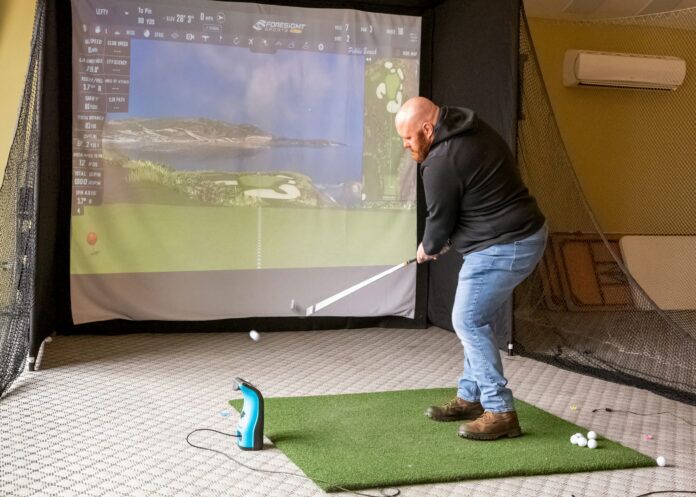
Many golfers dream of a perfect indoor setup, but the reality often clashes with the available square footage. A common misconception suggests that any open room will suffice for a launch monitor and screen. This belief often leads to costly mistakes where equipment cannot be used safely. The dimensions of the space dictate the entire project, from the type of camera used to the safety of the swing. According to MyGolfSpy, the first thing to understand is that height alone does not determine if a room works. The guide created with help from Indoor Golf Shop offers specific starting points for these calculations.
Most golfers build in a garage, a basement, or a spare bedroom. Garages usually offer plenty of depth and height, which helps with swing clearance. Obstacles like door tracks, door openers, and a parked car can hinder the setup. While basements offer a private space that is easy to illuminate, common problems include low ceilings, ductwork, and support columns. Spare bedrooms allow for simple climate control but frequently lack the front-to-back length required for a radar launch monitor. While a garage offers plenty of depth, the door opener might block the swing zone. A basement is out of sight, but beams and columns can block the shot path.
Measuring the Critical Dimensions
Height requirements depend on the player and the technology. Shorter golfers may find it easier to fit a setup. The ceiling height must accommodate the full arc of the swing, not just the standing height. Launch monitors also have specific clearance needs. Radar-based units require significant depth behind the ball to track the club properly. If a room is too shallow, these devices will not function correctly. According to MyGolfSpy, low ceilings and shallow spare bedrooms often prevent radar installation.
Choosing the Right Technology
A projector and screen setup needs more width than a simple net. The width of the room determines if a player can swing without hitting the walls or the projector. A wide stance or a long follow-through requires extra clearance on the sides. The guide explains that the width of the room matters for who will be swinging. A tall player with a wide swing arc needs more lateral space than a shorter player. A net might fit in a tighter space, but a screen offers a more immersive experience.
Practical Constraints for Home Builders
A garage might look perfect on paper, but the car parked inside eats up the necessary depth. Temperature swings in a garage can also affect the electronics and the ball flight data. Basements might solve the temperature issue, but the structural elements like ductwork create hazards. MyGolfSpy notes that garage builds often fail when door tracks and openers are placed in the swing zone, creating a major risk.

