
The Foursomes Struggle at Medinah
Team USA managed to secure a victory at the Presidents Cup, but the path to glory was anything but smooth. Before the Americans mounted their massive comeback at Medinah, their performance in the foursomes sessions raised significant red flags. The United States struggled immensely during the opening Friday session, posting a disappointing 2-7 record after Friday. The International team dominated that period, even completing a 5-0 sweep in one session. This slump put immense pressure on the American roster to find a way to recover.
The struggles were evident even among the team’s top stars. Scottie Scheffler and Justin Thomas both failed to find success in the foursomes format during that Friday stretch, each recording a 0-1 mark. These results were particularly jarring because both players maintained winning records throughout the rest of the tournament. While the team eventually overcame a 10.5-7.5 deficit to win the event 17-13, the early lack of chemistry in pairs remained a major talking point for analysts.
Data versus Instinct
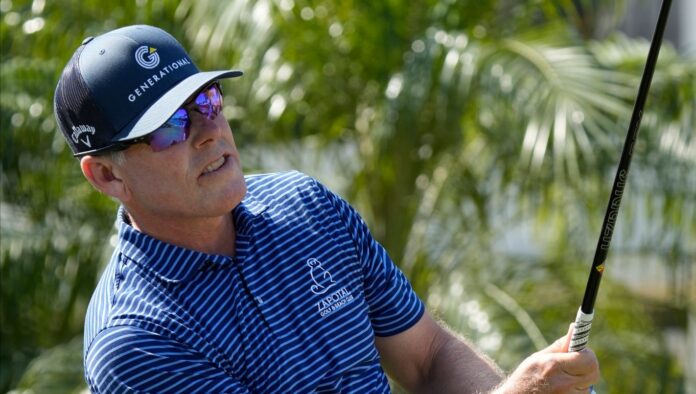
Yardbarker reports that Justin Leonard, a PGA Tour veteran and future U.S. vice captain, thinks the challenge of choosing pairings is frequently underestimated. Speaking with SiriusXM PGA TOUR Radio, Leonard addressed the debate regarding whether captains should rely on analytical models to set their lineups. He suggested that while numbers provide value, they aren’t a total solution for match play challenges.
Leonard used a sports metaphor to explain the limits of a purely mathematical approach. He argued that relying solely on statistical trends can be a mistake when the format changes. “And I think that’s the same way you have to look at stats and data, in that it will only take you so far to a point,” he noted.
For the veteran, the solution lies in the human element of leadership. He believes the most successful captains are those who can look beyond the spreadsheets. “At some point, there needs to be instincts involved,” Leonard stated. He went on to suggest that this intuition is what separates the best from the rest, saying, “And I feel like that’s the difference between great coaches or a great captain and ones that maybe aren’t so successful.”
The impact of these pairing decisions was visible in the scores of the team’s leaders. Scheffler partnered with Sam Burns but lost 1-up to the duo of Corey Conners and Nick Taylor. Similarly, Justin Thomas played alongside Cameron Young but fell 3&2 to Adam Scott and Christiaan Bezuidenhout. Despite these specific losses, the broader stats show the strength of the roster, as Scheffler finished the week 3-1 and Thomas ended with a 2-1-1 record.
The Complexity of Match Play
The tension between analytical modeling and gut feeling is a constant theme in high-stakes golf. In a standard stroke-play event, the numbers usually tell the whole story. However, the nature of a match-play format changes the math entirely. A player might have great recent stats, but the way they interact with a partner in a pressurized, alternating-shot environment is much harder to predict. This is why the 2-7 foursomes record for Team USA felt so much more damaging than the final result suggested.
If the U.S. is to avoid similar early-session collapses in future competitions, the captain must balance the spreadsheets with the room’s energy. Relying too much on the “Moneyball” approach risks ignoring the psychological momentum that defines the Presidents Cup. Success in these short, intense bursts of golf requires more than just a high driving accuracy or a strong putting average; it requires a synergy that data simply cannot capture. The comeback at Medinah proved the talent was there, but the early struggles proved that the math isn’t everything.