

Jordan Spieth has seen plenty during his career, but one issue appears to concern him more than ever: the changing behavior of golf fans in the era of legalized sports betting.
Speaking ahead of the John Deere Classic at TPC Deere Run in Illinois, Spieth was asked whether spectators have become rowdier following the treatment Wyndham Clark received at the U.S. Open. Rather than dismissing the question as an isolated incident, Spieth pointed directly at the rapid growth of sports gambling as a possible explanation.
Without being prompted about betting, Spieth suggested that golf faces a unique challenge compared to other professional sports.
“I do think that betting in golf is something that’s going to have to be tackled here soon,” Spieth said.
Why Spieth Believes Betting Has Changed Golf Fan Behavior
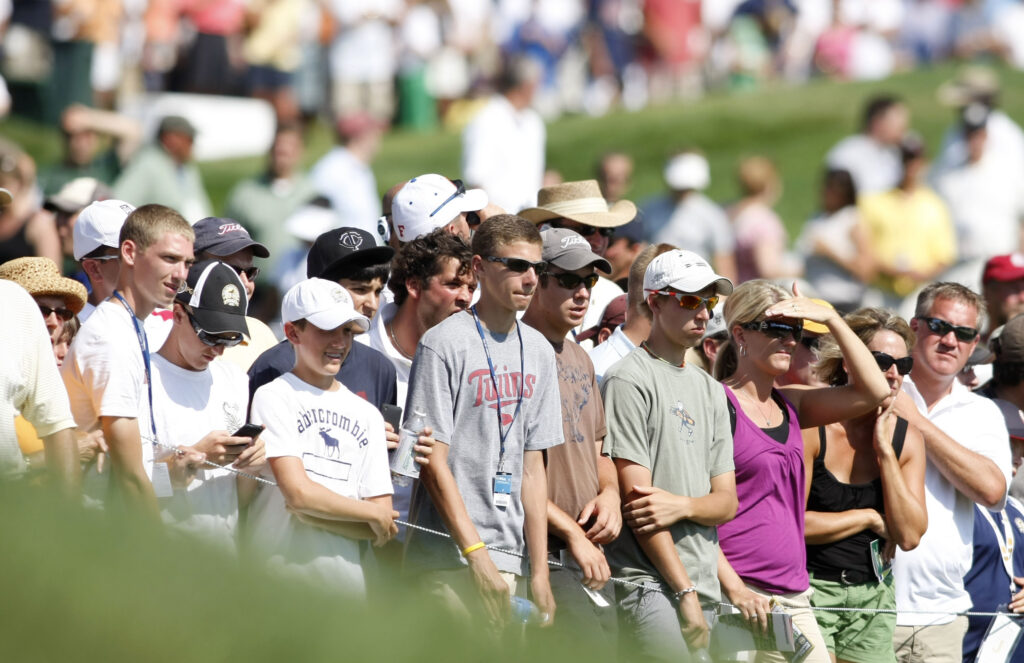
Spieth explained that betting markets can create incentives for spectators to influence play. He pointed to scenarios where fans may have wagered against the tournament leader, saying someone with anywhere from $100 to $10,000 riding on the outcome could have a financial reason to disrupt a player.
Unlike many sports where fans are separated from the action, golf places spectators only a few feet away from competitors throughout the round. Spieth believes that proximity creates opportunities for individuals to affect a shot if they choose to interfere, even if only briefly.
“I don’t know of another sport that you could impact as a fan as you can golf,” Spieth said. “So I don’t know how much that’s having to do with it, if it’s different than it used to be.”
Spieth acknowledged that heckling and hostile crowds are nothing new in professional golf. However, he argued that the motivation behind much of today’s fan behavior has changed. “It has to do with betting, and that is in the last five years,” he said.
Wyndham Clark Incident Renewed the Debate
Spieth’s comments come only weeks after Wyndham Clark endured repeated jeers during the U.S. Open at Shinnecock Hills. While golf has long prided itself on quieter galleries than many other sports, several recent tournaments have featured incidents involving disruptive spectators.
Clark’s experience also revived memories of the Ryder Cup at nearby Bethpage Black, where fan conduct became a major talking point. Following those events, Golf Channel analyst Eamon Lynch sharply criticized Long Island golf fans, describing them as a “stain” on the sport and arguing they did not deserve another major championship in the area.
Sports Betting Has Expanded Rapidly Across the U.S.
Spieth’s remarks also carry an interesting layer of context. Earlier in his career, he served as a FanDuel ambassador before the sports betting industry expanded dramatically across the United States.
That expansion has been rapid. Since the Supreme Court struck down the federal ban on sports wagering in 2018, 39 states have legalized sports betting in some form. Before that decision, Nevada was the only state offering legal sports wagering. Today, 32 states, including Illinois, where Spieth made his comments, also permit online sports betting, making it easier than ever for fans to place wagers during tournaments.
Spieth stopped short of proposing specific solutions, but his comments suggest the PGA Tour and golf’s governing bodies may eventually have to address how gambling affects fan behavior. As betting continues to grow alongside professional golf, the challenge will be preserving the competitive environment without diminishing the experience for players and spectators alike.

