

Gary Woodland’s return to the Masters should read like a straightforward comeback story. The former U.S. Open champion finds his form again, wins in Houston, and earns another walk up Magnolia Lane. But that version leaves out the part he can’t control, the one that follows him step for step, even inside the ropes.
When the Threat Feels Real, Even When It Isn’t
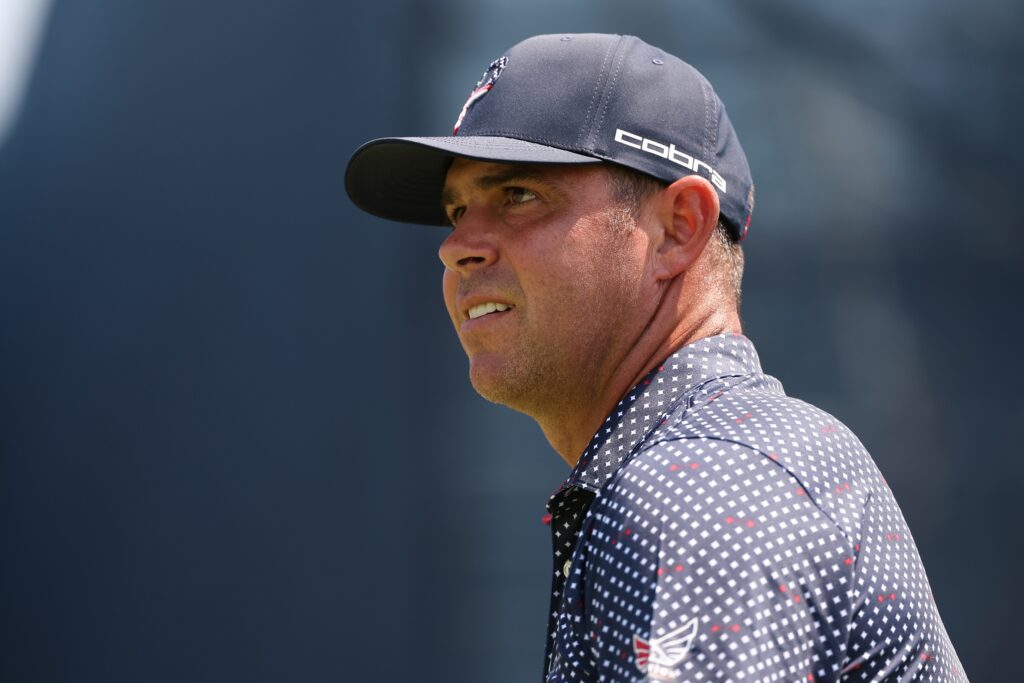
Woodland, now 41, is not just preparing for Augusta National’s tight fairways and fast greens. He’s preparing for something far less predictable. After undergoing brain surgery in September 2023 to remove a lesion that triggered seizures and severe anxiety, Woodland expected relief. Instead, the symptoms lingered, eventually leading to a diagnosis of post-traumatic stress disorder.
The effects are not abstract. During the Houston Open, where he secured his first PGA Tour win since surgery, Woodland described playing the final stretch in a state of hypervigilance, convinced at times that someone in the crowd might harm him. Ordinary tournament movement, a camera operator passing behind him, a walking scorer shifting position, could trigger the sensation instantly.
That reality has followed him to Augusta. Woodland has arranged for visible security during the Masters, not as a precaution against external threats, but as a way to manage what’s happening internally. If he can see security nearby, he can remind himself he’s safe. Without that anchor, the uncertainty can take over.
Playing Elite Golf While Managing Daily Uncertainty
He speaks about it plainly. There are moments when he feels in control, and others when he doesn’t. On the course, it’s a battle. Off the course, it doesn’t disappear. The setting doesn’t matter.
What makes this stretch more complex is that, physically, Woodland believes he’s playing some of the best golf of his career. The swing is there. The strength is there. But the question each week isn’t whether his game will hold up; it’s whether his mind will let him get through four rounds.
His victory in Houston carried visible weight. After the final putt dropped, Woodland didn’t celebrate in the usual way. He stood still, arms out, exhaling, then looked skyward as emotion took over. It wasn’t just about ending a winless stretch. It was about proving to himself that he could still function at the highest level while managing something that doesn’t follow a schedule or a scorecard.
A Shift From Silence to Speaking Out
For a long time, returning to Augusta wasn’t even a goal. There were stretches where simply getting through a day felt uncertain. Now he arrives at the Masters aware of both realities, his capability and his limits.
Woodland has chosen to speak openly about the diagnosis, and the response has surprised him. Not because of attention, but because of recognition. People see something familiar in the struggle, even if the details differ.
He doesn’t frame it as a message or a movement. He keeps it direct: talk to someone. Don’t try to handle it alone. That approach marks a shift from the mindset he carried for most of his career, where pushing through was the default response.
At Augusta, the margins are always thin. This year, Woodland is navigating margins that extend far beyond the leaderboard.

