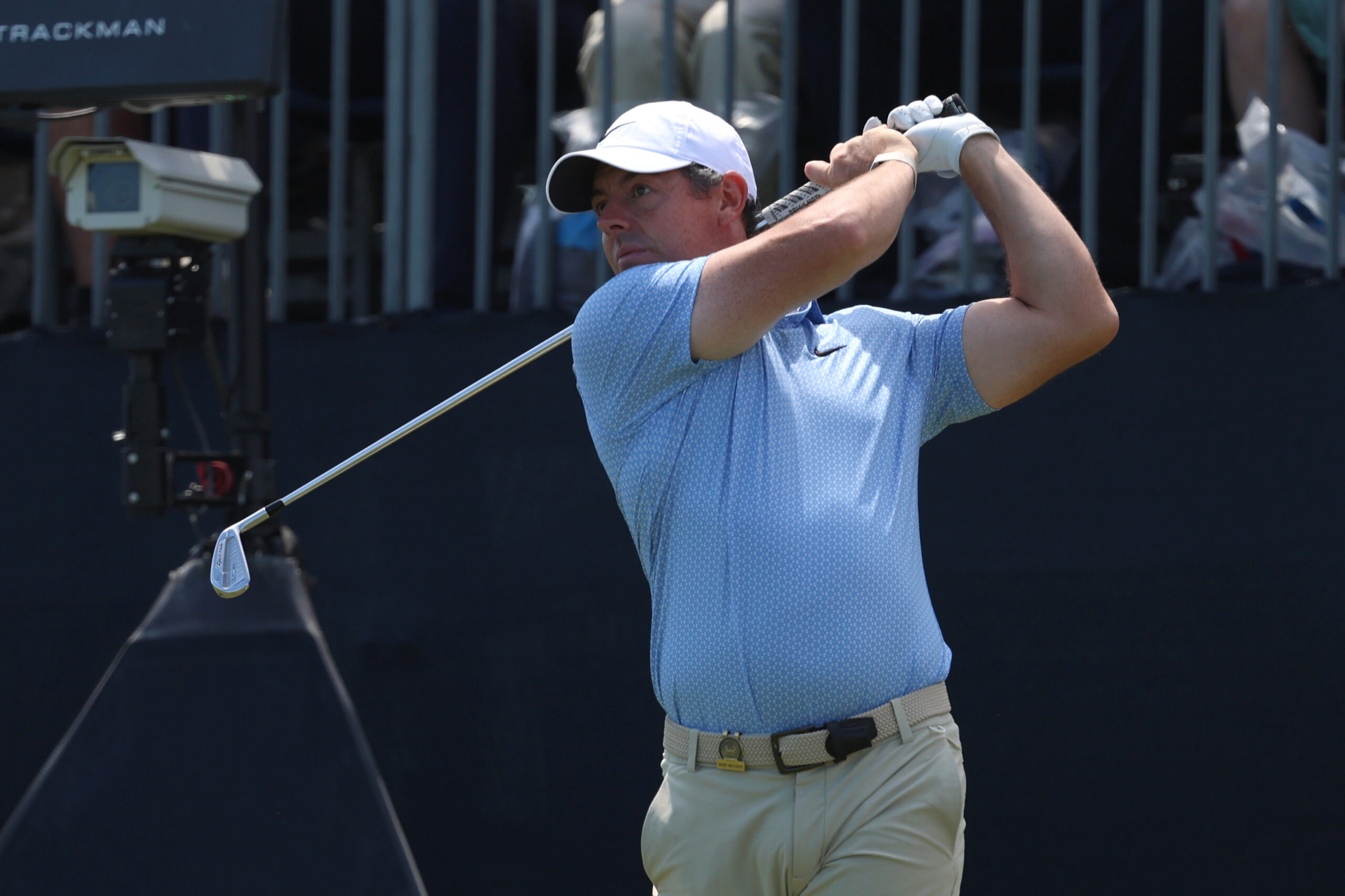
Rory McIlroy’s hopes of mounting a serious final-round charge at Shinnecock Hills quickly unraveled in a frustrating sequence of mistakes that left the Northern Irish star openly venting his anger on the course.
Starting the day at three over par, McIlroy already faced a difficult task if he wanted to climb back into contention. The margin for error was slim, and the demanding layout at Shinnecock Hills offered little room for recovery. Instead of gaining ground early, the World No. 3 found himself slipping further behind within the opening holes.
Early Trouble Piles Up

Trouble began on the second hole when McIlroy carded a bogey, adding another shot to his score and increasing the pressure. The setback was manageable on its own, but the following hole proved far more damaging both on the scoreboard and emotionally.
Standing in the middle of the fairway on the par-four third, McIlroy appeared to have an opportunity to attack the green and create some momentum. Instead, his approach shot took an agonizing turn. After landing, the ball rolled away from the target, eventually finding a large bunker rather than settling safely on the putting surface.
Frustration Boils Over
His reaction showed exactly how much the mistake stung.
The moment he struck the shot, McIlroy could be heard saying, “Ohh don’t fat it though.”
As the ball continued moving away from where he wanted it to finish, frustration boiled over. Watching the shot drift into trouble, he followed up with a blunt assessment of his own performance.
“Urgh just go home Rory, f****** hell.”
The comments reflected the mounting disappointment of a player who knew opportunities were slipping away on one of golf’s toughest stages.
Things did not improve. Another bogey arrived on the fifth hole, leaving McIlroy six over par for the tournament. Any realistic hopes of making a meaningful move up the leaderboard had largely disappeared, and the focus shifted from chasing contention to simply completing the round.
Promise From the Previous Round Fades
What made the collapse particularly difficult was the promise McIlroy had shown the previous day. After putting himself in a position to at least threaten the leaders, there was optimism that he could finish strongly. Instead, the final round became a battle against both the course and his own frustration.
For a player accustomed to competing at the highest level, the visible outburst offered a rare glimpse into the emotional toll that major championship golf can take. At Shinnecock Hills, every missed opportunity carried a price, and McIlroy felt the weight of those mistakes almost immediately. By the end of the opening stretch, the mountain he had hoped to climb had only become steeper.